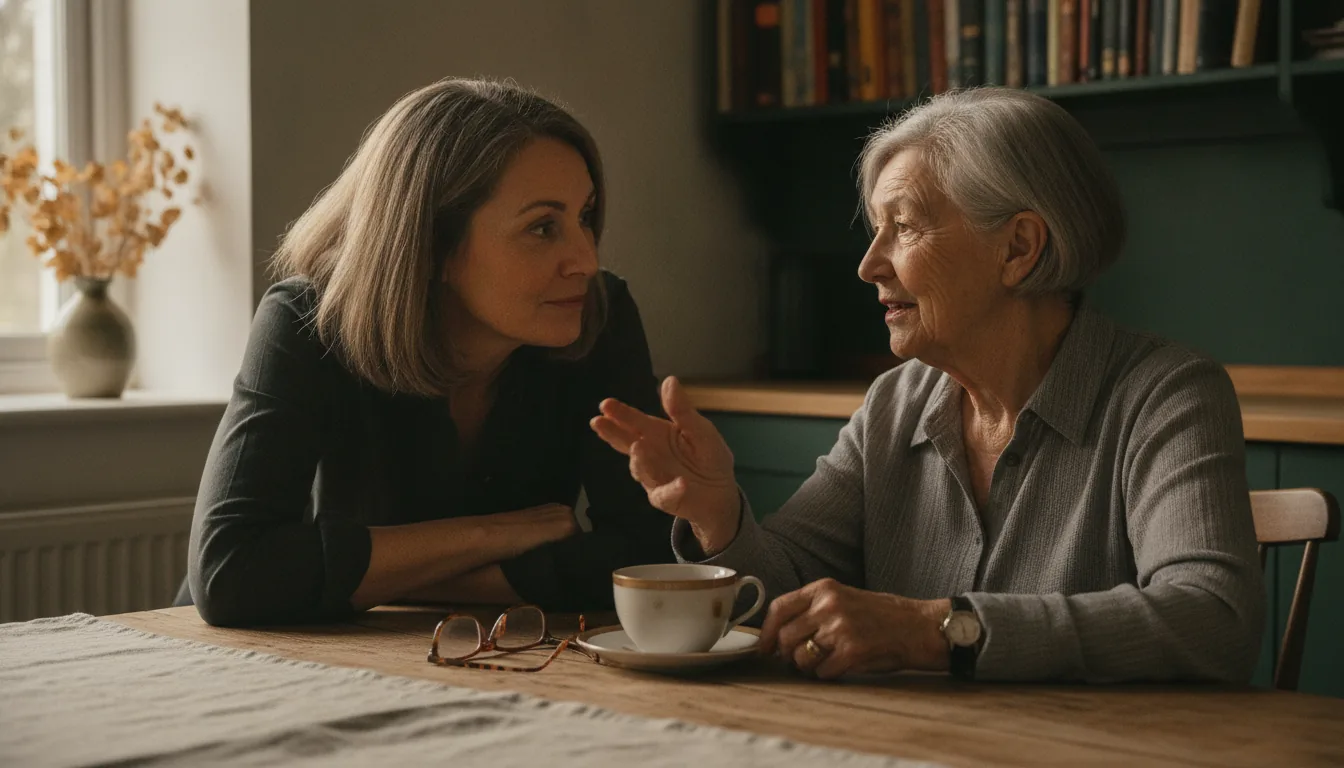
When a serious diagnosis arrives – cancer, motor neurone disease, Parkinson's, early-stage dementia – it rearranges everything. The family calendar shifts. Conversations change register. And somewhere beneath the shock and the scheduling, a quieter thought surfaces: we should write this down while we still can.
That thought is right. And it is the beginning of something worth starting this week.
Recording a life story after a diagnosis is not a sad project. It is – if anything – the opposite. It is a decision to spend some of the time ahead doing something that will still matter long after the diagnosis is a chapter in a longer story. The person you are worried about is still here. Their memory is still working. Their voice is still theirs. That is not just enough to begin – it is everything you need.
In brief
- A serious diagnosis changes the timeline. It does not change the story, or the person telling it.
- The weeks directly following diagnosis are often the most workable window – before treatment schedules and fatigue make longer sessions harder.
- Short, unhurried sessions work better than one marathon recording. An hour a week adds up quickly.
- Voice recordings are irreplaceable: they capture accent, rhythm, and laughter in a way no written transcript can.
- Chronicle is built for exactly this situation – guided conversations that feel like talking, not filling in a form.
Why now is actually the right moment
Counter-intuitive as it sounds, the period directly after a diagnosis is often the most workable window for a life story project. Treatments may not have started in earnest yet. The person is still functioning at or close to their normal level. And the diagnosis – however unwelcome – has cleared away the usual excuses. There is no longer a reason to keep putting this off until "a better time." The better time has arrived; it just arrived differently from how anyone expected.
Families who begin a life story project during this window consistently say the same thing: they are glad they started when their person was still entirely themselves, because that version – engaged, specific, sometimes funny, occasionally digressive – is exactly the person they most wanted to preserve.
Families who wait until things are harder say something different. They say: we should have started sooner.
What a life story project actually involves
The phrase sounds more daunting than the reality. A life story is not a formal memoir requiring months of uninterrupted writing. It is a series of conversations – short, guided, shaped by questions that draw out the stories your person has been meaning to tell for years and simply hasn't been asked.
Practically, it works like this. You sit together – or your person sits with a recording device – and work through a set of prompts, one session at a time. Childhood. School. First work. The people who shaped them. The decade they're proudest of. The things they'd want to pass on. Each session might last 45 minutes to an hour. Ten sessions can cover most of a life. The material is then shaped into something readable – a book, a lasting record, something the people who come after will actually open and return to.
If the diagnosis affects speech – some MND and Parkinson's presentations, some stroke recoveries – the timeline changes, and it changes urgently. In those cases, starting within days rather than weeks matters. Even incomplete recordings, even fragments, are more than nothing, and nothing is the only outcome that is truly irreversible.
How to approach the first session
The hardest part is beginning. Once the first conversation is underway, almost everyone settles into it – because talking about your own life to someone who genuinely wants to listen turns out to feel less like an interview and more like the best kind of kitchen table conversation.
Begin somewhere specific rather than at the beginning. "Tell me about the first house you remember" opens more than "Tell me about your childhood." "What was the job that changed how you saw yourself?" works better than "Tell me about your career." Specificity unlocks memory in a way that broad prompts don't.
Keep sessions realistic. An hour is comfortable. Much longer and attention starts to drift, especially for someone managing the particular tiredness that comes with illness or early treatment. A life told in twenty short sessions is the same life as one told in ten long ones – and it tends to be richer, because the person arrives fresh each time rather than depleted.
And record it. Even if the plan is to produce a written memoir eventually, the audio is worth having in its own right. It carries the accent, the rhythm, the way laughter starts before the punchline arrives. That is the version of a person that no written page fully preserves. Recording your parent's voice while they can still speak naturally is one of the things families never regret.
The question underneath all of this
When families come to a life story project in the wake of a diagnosis, the question they are often really asking is: is it too late?
The honest answer, in almost every case, is no. The window is narrower than it would have been before the diagnosis. But it is still open. And the stories – the specific, textured, irreplaceable stories of who this person is – are still there, still waiting to be asked for.
That is the thing worth holding on to. The diagnosis changes the timeline. It does not change what is possible. If anything, it makes the case for starting not because time is running out, but because the time that remains deserves to be used well.
Chronicle is designed for exactly this kind of start – guided sessions, at your pace and your person's pace, with a printed book at the end. If you'd like to understand how the process works before committing to anything, the how-it-works page is the best place to begin.
For practical help with the first session itself – what to ask first, how to set it up so it feels natural – how to interview your parent without it feeling like an interview is worth reading before you sit down together.
Starting is not a sad thing to do. It is the opposite of sad. It is the thing you will be glad you did.