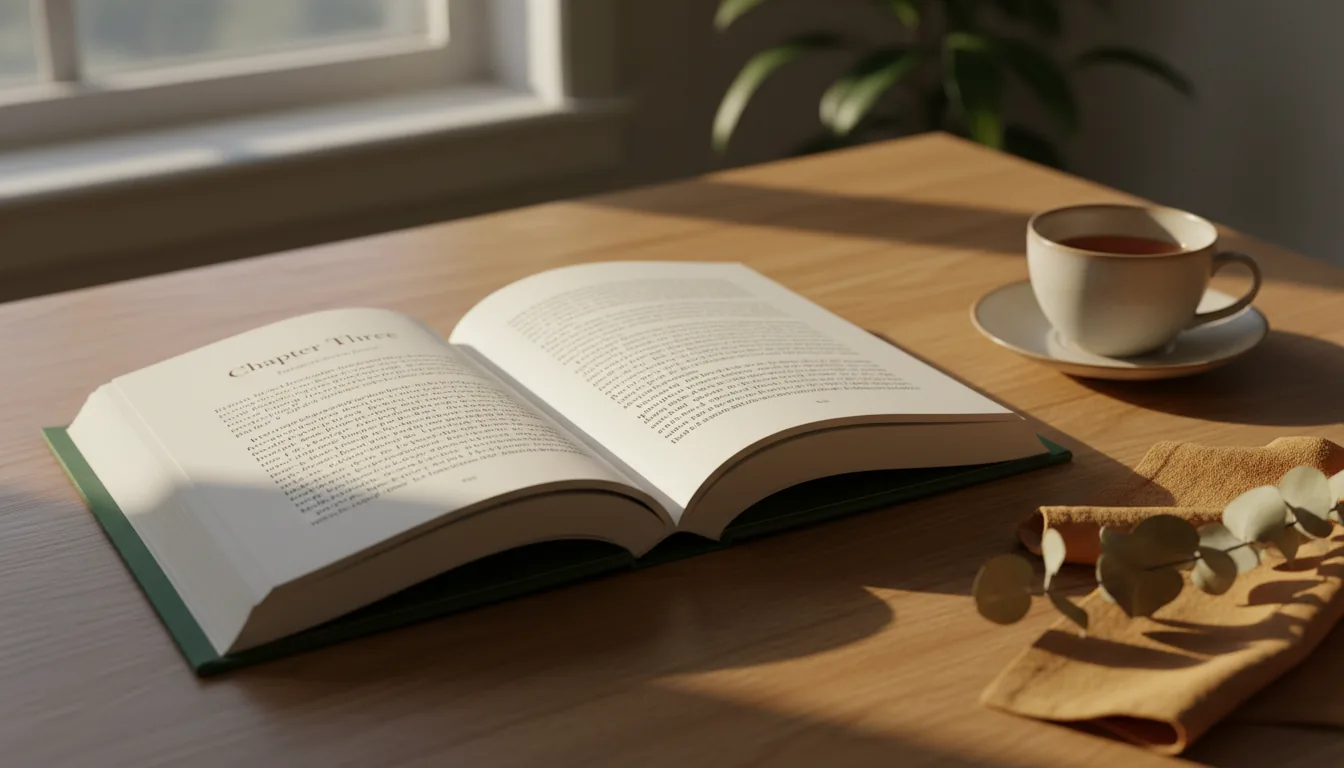
A life story book is a printed record of one person's life – their childhood, their work, the people they loved, the moments that shaped them – written in their own words and bound as a finished book the family can keep. It is part memoir, part keepsake, part family record. Unlike a memoir written for publication, a life story book is made for a particular family rather than a public readership: the writing stays honest, particular, and undisguised. Most life story books today are made through a guided process – a structured set of prompts that move through a life over a series of conversations – and the result is printed and bound for the family to hand down. This guide explains what they are, who they're for, and the four routes families take to make one.
In brief
- A life story book is a printed, in-their-own-words record of a single person's life.
- It is different from a memoir for publication, a journal, and a genealogy chart.
- Four routes exist: self-written, a fill-in journal, a professional biographer, or a guided memoir service.
- The right route depends on time, budget, and how much of the work the storyteller can do alone.
- Most life story books today combine guided conversation with light professional shaping.
What a life story book is – and isn't
A life story book is the finished, bound version of one person's life as they told it. The defining features are simple: it is about a single person, it is in their own voice, and it ends as a physical book rather than a folder of audio files or a digital archive.
That distinguishes it from several adjacent things:
- A memoir for publication. A memoir written for general readers is shaped to sell. It has narrative arc, themes, a structure that works for strangers. A life story book is shaped for a family. It doesn't need to be marketable; it needs to be true.
- A journal or diary. Diaries are written in the moment, often without an audience in mind. A life story book is reflective – it looks back across a life with the benefit of hindsight.
- A genealogy chart. Genealogy records who you are descended from. A life story book records what those people's lives were actually like.
- A scrapbook or photo album. Albums show. Life story books tell.
The most common confusion is with autobiography. The distinction in practice is intent. An autobiography is usually written by someone who expects to be read by people who don't know them. A life story book is written for the people who already love the person whose story it is.
Who life story books are for
Most life story books are made for one of three reasons.
To preserve a parent or grandparent's story before it's lost. This is the most common starting point – usually an adult child who has noticed a parent slowing down and realised the stories will go with them. The window feels finite, and they want to do this properly before it closes.
As a meaningful gift for a significant occasion. A 70th, 80th, or 90th birthday. A golden wedding anniversary. A retirement. The book lands differently from any object – it acknowledges that the person has had a life worth recording, and it gives the family something to hand around for decades.
To write your own story for the people you love. Some life story books are commissioned and narrated by the same person – someone in their sixties or seventies who has decided, on their own initiative, that their grandchildren should know who they really were. (For more on this route, see How to Write Your Life Story for Your Grandchildren.)
In each case, the audience is the family rather than the public. That changes what gets included and how the book is shaped.
Four ways to make a life story book
There are four mainstream routes. They differ in cost, effort, and how much of the work falls on the storyteller versus the helper.
| Route | Who does the writing | Typical UK cost | Time required | Best for |
|---|---|---|---|---|
| Self-written | The storyteller, by hand or on a computer | Free (plus printing) | 1–3 years, intermittent | Confident writers who want full control |
| Fill-in journal | The storyteller, answering printed prompts | £20–£40 | 6–12 months | Self-motivated storytellers on a small budget |
| Professional biographer | A hired writer interviews and writes | £3,000–£10,000+ | 6–12 months | Families with budget who want a literary product |
| Guided memoir service | The storyteller speaks; the service shapes the writing | £49–£299 | 3–6 months | Most families – structure with the storyteller's actual voice |
Each route works for different households. Self-written produces the most personal book if the writer finishes it – but the abandonment rate is high. Fill-in journals are accessible and inexpensive but tend to produce a folder of answers rather than a finished book. Professional biographers produce extraordinary results at a price most families won't reach, and the finished prose often reads in the writer's voice rather than the storyteller's. Guided memoir services have grown rapidly because they sit in the middle: the storyteller talks, the service shapes, the family gets a finished hardcover book at the end.
What goes inside a life story book
Most life story books move through a life thematically rather than year-by-year. The classic structure covers around a dozen chapters:
- Childhood and family of origin
- School and growing up
- Young adulthood
- Work and career
- Love, marriage, and family
- Difficult years
- Places that mattered
- Beliefs and values
- Who you became
- What you would want passed on
The order matters less than the coverage. A complete life story book doesn't try to capture everything – it captures the texture of who someone was, in their words, with enough detail that someone reading it in fifty years will feel they have met them. Photographs are usually woven through the chapters. So are reproductions of letters, a handwritten dedication, the occasional document that carried weight at the time. The book is not just text – it is the physical artefact a family will keep.
If you'd like a fuller picture of which approaches actually work and which quietly fail, the companion piece Preserving Family History in 2026: What Actually Works goes through them in more depth.
How long it takes and what it costs
A guided life story book takes most families three to six months from setup to finished printed book. That works out at roughly one short session a week – usually thirty to forty-five minutes – over the course of a few months. Costs in the UK range from around £49 for a complete digital and printed memoir at the simpler end, up to £299 for an heirloom-grade hardback. Professional biographers charge several thousand pounds and up, and produce a more literary product over a longer timeline.
What changes between price points is not whether you get a book at all, but the binding, the paper weight, the number of copies, and whether photographs print in colour. The conversations themselves – the substance of the book – are what matter most.
How Chronicle helps
Chronicle is a UK memoir company that produces life story books through guided conversation. A family member sets up the storyteller's Chronicle, the questions arrive one chapter at a time, and the storyteller answers them in their own words – speaking or typing, at their own pace. Each conversation becomes a written chapter you can read, edit, and approve before it joins the rest of the book. When all thirteen chapters are done, the book is printed and bound and delivered. A complete story, not a weekly habit. No subscription. The book is the end.
Frequently asked questions
Is a life story book the same as a memoir?
Almost. The terms are often used interchangeably. The distinction in practice: a memoir tends to imply something written for a broader audience, while a life story book is made specifically for the family. The format and process can be identical; the audience is the difference.
Do I have to be a writer to make one?
No. The point of a guided service is that the storyteller speaks – or writes short, simple answers – and the writing is done for them. Each chapter comes back drafted in the storyteller's own voice, ready to read and amend. Even self-written books work better when the writer treats it as transcribed speech rather than literary prose.
How long should a life story book be?
Most run to between 150 and 300 pages. That is enough to give each chapter its own texture without overwhelming the reader. Books much longer than that tend to lose narrative shape; much shorter and they read as summaries.
Can a life story book be made after someone has died?
Partially. A book can be assembled from letters, diaries, recordings, and the recollections of people who knew them – but the result is a portrait by others rather than the person speaking for themselves. The richest life story books are the ones started while the storyteller can still answer in their own words.
What format is the finished book?
A hardcover or softcover book, printed and bound, usually sized like a novel rather than a coffee-table book. Most services include a digital PDF as well. The physical book is the heart of the product; the digital is the backup.
How do I start?
The hardest step is usually agreeing to start at all. If the storyteller is older, a short conversation about why now matters tends to help more than a long pitch about the process. Beyond that, any of the four routes above will work – the right one is the one that gets finished.
Chronicle turns guided conversations into a printed life story book, one chapter at a time. See how it works →